Saturday, 22 March 2014

Sources on the Cocos Malays: Reading List / Bibliography

In 2022 I published my book, The Cocos Malays: Perspectives from Anthropology and History. While I was researching it from about 2014, I have tried to keep a list of sources I came across. To keep adding to this to create the list below, please let me know if you find a publication not mentioned here.

William Clunies-Ross with his wife Clara Clunies-Ross and children  [between 1908 and 1921]
Clunies Ross family photography collection.

Sources on the Cocos Malays:
 An Annotated Bibliography


The following reading list is dedicated to sources that might be useful in studying the history and culture of Cocos Malays, specifically of the Cocos (Keeling) Islands. The referencing style is rigorously inconsistent. For the purposes of this blog  "Primary" includes documents, archives, and self-published works. "Secondary" includes scholarly and works that are not self-published. However, I am certain that my division of "Secondary" and "Primary Resources" is untenable according to a post-structuralist undergrad essay I wrote, but I can't find that essay right now.  Anyway, with so few entries, I need your help. Please send me suggestions!


Audiovisual sources

Many tourism-type videos can be found on YouTube. But there are also some seriously good documentaries:
  1. "The World of Cocos Malay Music and Dance". Created by David Irving and Jenny McCallum this provides amazing insight into Cocos Malay music and dance.
  2. "Australia's Forgotten Islands". This was produced by SBS. It documents Cocos Malays' attempts to be recognised as 'indigenous'
  3. "Cocos Malaise" produced by the Dateline program from Australian broadcaster, SBS. Argues that, through White racism, Home Islanders have been sorely treated after integration with Australia. No longer available on SBS website but can be seen on YouTube.
  4. "Dynasties: Clunies Ross". Australian broadcaster ABC produced this documentary about the Clunies-Ross family, which effectively ruled the Cocos (Keeling) Islands for over 150 years. 
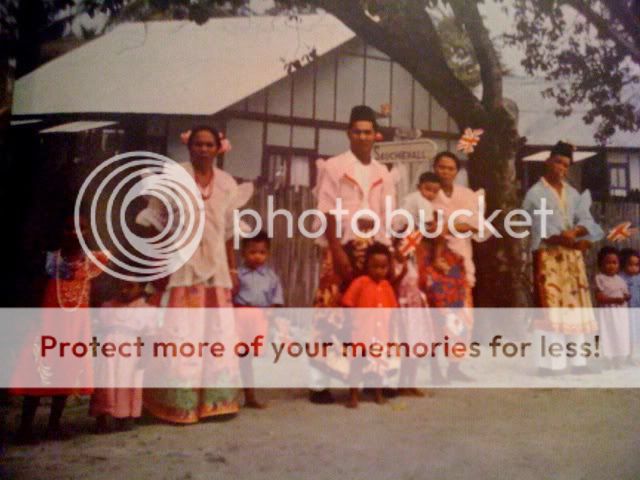


The author of the website noted "The road sign reads Sauchiehall. That's also the name of one of the busiest shopping streets in Glasgow!!". The flags are apparently for QEII's 1954 visit.


Secondary Sources: Important Contributions

Here are secondary sources that may be useful, depending on your research direction:
  1. Ackrill, Margaret. 1984. "The origins and nature of the first permanent settlement on the Cocos‐Keeling Islands," Australian Historical Studies, 21:229-243. Purports to identify a "significant historical error". The author clearly has a sharp intellect. 
  2. Ackrill, Margaret. 1994. "British imperialism in microcosm: the annexation of the Cocos (Keeling) Islands." Economic History working papers (18/94). Department of Economic History, London School of Economics and Political Science, London, UK.
  3. Adelaar, Sander. 1996, 'Endangered Malayic isolects: the case of Salako, Sri Lanka Malay and Cocos Malay', in JT Collins & H Steinhauer (eds), Endangered languages and literatures in Southeast Asia, Royal Institute of Linguistics and Anthropology, Leiden.
  4. Adelaar, Sander. 1996. "Malay in the Cocos (Keeling) Islands" in Reconstruction, Classification, Description. Festschrift in honor of Isidore Dyen, Bernd Nothofer (ed.), Hamburg: Abera Verlag (Asia Pacific).
  5. Ansaldo, Umberto. Contact Languages: Ecology and Evolution in Asia. Describes Cocos Malay as a Contact Language and situates it among other such Contact Languages in Asia
  6. Armstrong, Patrick. 1991. Under the Blue Vault of Heaven: A study of Charles Darwin’s Sojourn in the Cocos (Keeling) Islands Indian Ocean. Centre For Peace Studies, Nedlands, WA. As the title indicates, Darwin is the focus of this book. Cocos Malays are, understandably, incidental to the text.
  7. Brockman, Rosemary Ann. Captives on Cocos : the origins and evolution of the plantation community of the Cocos (Keeling) Islands. M Phil thesis. Murdoch University. 1981. Essential reading. Also available here.
  8. Bunce, Pauline. 1988. The Cocos (Keeling) Islands: Australian atolls in the Indian Ocean. I found this book the best starting place for researching the Cocos Islands.  I think this book provides the best overall picture of the islands' geography, history, wildlife etc. 
  9. Bunce, Pauline. 1987. Cocos (Keeling) Islands: Cocos Malay culture. West Island, Cocos (Keeling)Islands Department of Territories. Essential reading.
  10. Bunce, Pauline. 2012. "Out of sight, out of mind...and out of line. Language Education in the Australian Indian Ocean Territory of the Cocos (Keeling) Islands". In Vaughan Rapatahana, Pauline Bunce, English Language as Hydra.  Multilingual Matters, Bristol, Buffalo and Toronto, 2012, xxv + 275 . This chapter concerns the status of Cocos Malay language in relation to the education of Cocos Malays students on Home Island
  11. Castles, Ian. 1992. First Counts for Christmas Island and the Cocos (Keeling) Islands: 1991 Census of Population and Housing. Australian Bureau of Statistics, Canberra.
  12. Dutt, Srikant. "The Cocos-Keeling Islands".  Journal of Southeast Asian Studies, Vol. 12, No. 2 (Sep., 1981), pp. 476-483. Provides an overview of history from WWI to the 1970s. Thanks to Russel Palmer for sending this to me! 
  13. Laffan, Michael. "Subjects of an Orientalist despot: John Ross and the ‘Malaynesian’ people of the northeastern Indian Ocean, 1812–54" 
  14. Gibson Hill, C.A.  1947, “Notes on the Cocos-Keeling Islands”. Journal of the Malayan Branch of the Royal Asiatic Society. Vol. 20. Part 2, p. 162 . Essential reading.
  15. Gibson Hill, C.A., 1952, "Documents relating to John Clunies Ross, Alexander Hare and the early history of the settlement on the Cocos-Keeling Islands". Journal of the Malayan Branch of the Royal Asiatic Society.  Vol.25 No. 4/5 pp.1-306. Essential reading.
  16. Gibson Hill, C.A.. The Colourful Early History of the Cocos Keeling Islands. Apparently, this is a reprint of "Documents relating to John..." above.
  17. Wan Hashim, Wan Teh & A. Halim Ali. Rumpun Melayu Australia Barat.  1999. Penerbit UKM: Bangi. ISBN 967-942-437-5 (paperback). Written in Malay, this book apparently describes the Cocos Malays who have emigrated to Western Australia. Thomas Barker helped me get it from Malaysia, thanks Dr Barker! 
  18. Hobson, Valerie (2008) Our island home: the story of the circumstances which led to the Cocos Malays relocating to Western Australia – some via Christmas Island. Sydney: Frontier Services. Since the 1970s,  Cocos Malays have migrated to Western Australia. Some of their stories of relocation are collected in this publication.
  19. Hughes, J.S. Kings of the Cocos. 1950, Methuen
  20. Hunt, J.G. 1989. The revenge of the Bantamese: factors for change in the Cocos (Keeling) Islands 1930-1978. PhD thesis, Australian National University, Canberra.
    Essential reading. This thesis is downloadable in three parts: Part 1 (-p. 86)Part II (pp .87-184), and Part III (p. 185-end).  His bibliography
    , "The Revenge of the Bantamese" provides some promising theses and other sources.
  21. David R. M. Irving (2019) Strings across the ocean: practices, traditions, and histories of the Cocos Malay biola in the Cocos (Keeling) Islands, Indian Ocean, Ethnomusicology Forum, 28:3, 283-320. David Irving conducted fieldwork on Home Island in the 2010s looking among other things at the violin (biola) and how Cocos Malays have made it theirs. 
  22. Irving, DRM 2023, 'Transplanted Musics in a Plantation Society: Performing Arts on the Cocos (Keeling) Islands, 1826–1955', in J Sykes & J Byl (eds), Sounding the Indian Ocean: Musical Circulations in the Afro-Asiatic Seascape, University of California Press, Oakland, California, pp. 251-273. 
  23. Kerr, Alan. A Federation in the Seas: An account of the Acquisition by Australia of its external territories."Chapter 11: Cocos (Keeling) Islands)", pp. 267-313. This chapter covers the legal and diplomatic aspects of the transfer of the Cocos (Keeling) Islands from the UK to Australia. This transfer was announced in 1951 and became operative in 1955. Original documents relating to this transfer can be found on pp. 292-313.
  24. Keyser, Arthur Louis, 1922. People and places; a life in five continents. Read around pp. 205-206.
  25. Lapsley, Tony. 1983. Cocos Malay syntax. Unpublished MA thesis, Monash University, Melbourne. Tony Lapsley was a translator with the Cocos Malay contingent that went to the UN in 1984 to announce integration with Australia. This thesis describes the grammar of the Cocos Malay language/dialect.
  26. McCallum, Jenny. 2020. Being Distinctive: Cocos Malay Islamic Music in the Cocos (Keeling) Islands, Mainland Australia, and Beyond. Musicology Australia, 42 (1), 1–21.
  27. Mowbray, Martin (1997) "The Cocos (Keeling) Islands: A study in political and social change," Australian Journal of International Affairs, 51:3, 383-397. Discusses changes wrought by the Australian government and the UN in the 1970s. Essential reading. 
  28. Mowbray, M., 1997. Decolonization and Community Development on the Cocos (Keeling) Islands. Community Development Journal, 32(4), pp.321-331. Covers matters of administration, sovereignty, and law in the period from the visit of a UN Mission in 1974 up to the 1990s. The focus is on community welfare and participation.  
  29. Mullen, Ken. 1974. Cocos Keeling--The Islands Time Forgot.
  30. Saunders, G. 1980. Seekers of kingdoms: British adventurers in the Malay Archipelago. Brunei Museum Journal  137–54. In the 1800s, various Europeans, and especially British men, decided to set up kingdoms for themselves in Southeast Asia. This article, written for the historian, describes Alexander Hare and his founding of a settlement in the Cocos Islands.
  31. Smith, T.E. . 1960. "The Cocos-Keeling Islands: A Demographic Laboratory". Population Studies, 14 (2), pp. 94-130. Written for demographers, this article describes factors which increase and decrease the population of Home Island (e.g. fertility, disease, migration etc.).
  32. Sonderberg, C (2014) 'Cocos Malay', Journal of the International Phonetic Association vol. 44, no. 1, pp. 103-107. Provides linguistic analysis of Cocos Malay as spoken on Borneo.
  33. Souter, Gavin 'Cocos: a history of the Cocos (Keeling ) Islands and the Clunies Ross Family.' According to the National Library of Australia, "Souter was commissioned by John Clunies-Ross to write a history of Cocos (Keeling) Islands, but it has not yet been published. The series contains the complete handwritten manuscript." I would love to read this unpublished manuscript. Presumably, it is the basis of Cocos Chronicles. 
  34. Tahmindjis, Phillip, 1985. "Australia, the Cocos Islands & self-determination." Queensland Institute of Technology Law Journal, 1. In the 1984 Act of Self-Determination, the Cocos Malays of Home Island voted that the Cocos Islands should become part of Australia. Written for a legal studies audience, this article assesses this Act and what it says about the interaction of international and Australian law. Thus it says little about events on Cocos, which only form a background to a technical discussion of law.
  35. Tarling, Nicholas. The Annexation of the Cocos-Keeling IslandsHistorical Studies: Australia and New Zealand Vol. 8, Iss. 321959. Describes how, in 1857, the British annexed the Cocos (Keeling) Islands by accident.
  36. Welsh, A 2001, 'Verbal Affixes of Cocos Malay', Masters (Preliminary) thesis, Bundoora, La Trobe University.
  37. Welsh, A 2015 'Cocos Malay Language Since Integration with Australia', Shima: The international journal of research into island cultures, vol. 9, no. 1, pp. 53-68.
  38. Welsh, Alistair (1999). 'The Cocos Malay Language', Pelangi: An Educational Magazine about Indonesia, vol. 15, no. 4, pp. 6-9.
  39. Wood Jones, F. (1912)  Coral and Atolls; a history and description of the Keeling-Cocos Islands. London: Lovell Reeve & Co., 1912. Essential reading.

Primary Sources 

  1. Clunies-Ross. The Clunies-Ross Chronicle. Published by the last 'King', this book chronicles many of the events during his rule. It was apparently written by Gavin Souter.
  2. HMS Beagle, the ship carrying Charles Darwin, visited April 1-12, 1836. Three diarists kept an account of the visit, Darwin himself, Captain FitzRoy, and Syms Covington (Darwin's assistant). This wonderful Blog is essential reading. It lays out the three writer's entries for each place the Beagle visits. This makes it easy to compare their impressions of each place visited.
    You can find the Syms Covington journal by itself online. 
  3. Senate Standing Committee on Foreign Affairs and Defence Report on UN involvement with Australia’s Territories (1975). Some Senators got together to try to work out how Australians should respond to the pressure from the UN regarding the Cocos (Keeling) Islands and other territories of Australia. They were struggling to deal with the legal and political consequences of UN involvement. This document records their discussions, tables crucial documents (from the UN and other agencies) and presents Senators' findings. It is divided into:
     Part 1 (671 pages). A transcript (i.e. Hansard) of the discussions between the senators at their formal meetings to discuss the Cocos (Keeling) Islands in relation to the UN. Documents they 'table', that set for discussion, are also included; and,
     Part 2 (678 pages). More transcript (Hansard) and documents right up to page 907. After this, the Senators' report begins. 
  4. Cocos Capers. A Collection of stories written by residents and visitors, mostly from the Australian mainland. 
  5. Bruce Clunies-Ross, Cocos Maritime History: A History of the Ships and Boats of the Cocos (Keeling) Islands in the Indian Ocean. This manuscript is sold at the Cocos Tourism office.
  6. Clifford, Hugh (1902) The Romance of a Scots Family.  Blackwood's Edinburgh Magazine. A gushing fluff piece.
  7. Cocos (Keeling) Islands Act 1955.
    http://www.austlii.edu.au/au/legis/cth/consol_act/cia1955198/
    This is the act that enabled "acceptance of the Cocos or Keeling Islands as a Territory " of Australia
  8. United Nations Department of Political Affairs, Trusteeship and Decolonization. "Issue on Cocos (Keeling) Islands" No 11, April 1978.
    http://www.un.org/en/decolonization/pdf/decolonization/decon_num_11.pdf
    This provides great insight into how the UN perceived the issues leading up the Act of Self-determination.
  9. The Cocos (Keeling) Islands – Fact sheet 103  The National Archives of Australia has prepared this overview of some of the archives possessed by Australia relating to the Cocos Islands.
  10. "Chapter 8  Commonwealth Infrastructure On The Indian Ocean Territories"
    https://www.cgc.gov.au/attachments/article/52/Chap%208%20Cwlth%20infrastructure%20.pdf
    Provides useful information on the construction of houses, wharves, roads and other critical infrastructure.
  11. Cocos (Keeling) Islands Annual Report 1983-84. Department of Territories and Local Government. Australian Government Publishing Service Canberra 1984.
    I haven't accessed the Annual Reports yet, but they should provide helpful info about the last 3 decades.
  12. Bureau of Statistics 2 001 population for Cocos Keeling Islands. Page 12 lists the 1996 population on census night as 655 and then, in 2001, 621.
    http://www.ausstats.abs.gov.au/ausstats/subscriber.nsf/0/90B4C67311FFFBD0CA256C310083BE38/$File/2015.5_2001.pdf
  13. Bureau of Statistics, 2011 data on Cocos Keeling Islands. Lists the total population as 550. Some of the census data appear inaccurate; i.e. they are hard to reconcile with my impressions from living here.
    http://www.censusdata.abs.gov.au/census_services/getproduct/census/2011/communityprofile/910053009?opendocument&navpos=220
  14. Cocos (Keeling) Islands--Interpretation Plan 2008 http://www.ga.gov.au/webtemp/image_cache/GA21022.pdf This document is intended to describe how Home Island heritage might be best displayed to tourists etc. Doing this also provides useful information on Home Island's heritage.
  15. Wynne, "When there was trouble in paradise." Reporters write the piece, but editors choose the title.  So don't let the cliched title put you off. This is a superb piece of journalism.
  16. United Nations "Decolonization", no. 11, 1978.
  17. United Nations "Decolonization" no. 21, 1984.

Archives

  1. The National Library of Australia's Guide to the Papers of Sir John Clunies Ross has a bunch of papers. They  "consist primarily of autobiographical writings of Clunies-Ross referring especially to his relations with Alexander Hare."
  2. Singapore Museum interviews with Roderick Maclean, administrator on the Cocos Islands. 
  3. In relation to the above, it will be recalled that Charles Darwin visited Cocos.  Darwin's ship captain was a man named FitzRoy. FitzRoy published a diary of his trip with Darwin Voyages of the Adventure and Beagle. Afterward, John Clunies Ross made fun of this, writing what he called an appendix to FitzRoy's book. Because John Clunies Ross is making of Fitzroy, his writing is sometimes called a "Satire" others call it the "Preface". Whatever it's called it is about 87 pages long. In it John Clunies Ross pretends to be FitzRoay. Photos of John Clunies Ross's writing can be found and read online through Trove. The handwriting is hard to read, but luckily it has been transcribed by the Darwin Project
  4. Raffles papers at British Museum.
  5.  Australian National Archives. Go to their photo search and search "Cocos" or similar. Paul Tickell put me onto this great source of digitized photographic images of the Cocos (Keeling) Islands. I need to be wary as Christmas Island and Cocos Islands photos are intermingled.

Cocos Malays of Sabah, Borneo

  1. On the Cocos Malays in Borneo http://portal.softbox.com.my/v7/kampungkokos/index.php/en/history.html
Noor Aziah Mohd AriffinNurul Ain OsriNurul Hamiruddin SallehNurul Hamiruddin Salleh, Intangible Cultural Heritage (ICH) of Cocos Malays in Tawau, Sabah

Historical Fiction

Mateer, The Quiet Slave recounts the events immediately following settlement on the island in 1826 from the perspective of a fictional female slave

Secondary Sources/
Publications I've been involved in:

Feyrel, R., Saldin, M., Winarnita, M., Thomas, P., Welsh, A., Herriman, N., -"Australia's Malay History and Heritage"

Herriman, N. and Winarnita, M. (2012) ‘Sinetron Keeps Links with Indonesia Alive: Despite Isolation and Multiple Migrations the Cocos Malays Maintain a Resilient Culture’, Inside Indonesia 109: Jul-Sep 2012. This article argues that Home Islanders' connection with Indonesia is facilitated by watching soap operas! 

Winarnita, M. and Herriman, N. (2012) Caring and Family: Marriage Migration to the Malay Muslim Community of Home Island (Cocos Keeling Islands)’, Indonesia and the Malay World, 40 (118), pp. 372-387. In many local marriages, a spouse has had to migrate to Home Island. Written for scholars in the social sciences, this article analyses marriage migration on Home Island.

This  Blog: “Cocos (Keeling) Islands Fieldwork” documents my experience of anthropological fieldwork as a way to approach Cocos Malay culture.  The National Library of Australia (NLA) requested to archive this Blog on Pandora. (As NLA’s website explains “PANDORA, Australia's Web Archive, was set up by the Library in 1996 to enable the archiving and provision of long-term access to online Australian publications.”) So my Blog is now available on the PANDORA Archive.

To commemorate the 30th anniversary of Self-Determination by the Cocos Malays, I wrote “Australia’s Malay population” (2014). This article describes the historical context in which the local population voted to integrate into Australia in 1984. It was published in ANU’sNew Mandala and attracted a wide readership and numerous historically relevant comments.
 
I was interviewed for five radio segments by the Australian Broadcasting Commission (ABC). These were broadcast through the Australian state of Victoria on successive weekdays in 2015 (if I remember the year correctly).

La Trobe Asia interviewed me on their Asia Rising podcast about Cocos Malay culture and relations between Cocos Malays living on mainland Australia and in Malaysia. I talked specifically about the exchange of fresh seafood from Cocos Islands for sate from Katanning, Western Australia. I called it an “esky economy” because these products are sent in Styrofoam iceboxes, which are called ‘eskies’ in Australia. df
 
I expanded the “esky economy” idea in the Asian Studies Association of Australia’s Asian Currents Blog. My article was entitled “Seafood, sate, and spouses—giving and receiving among the Cocos Malays” (2015).

 Herriman, N. and Winarnita, M.  (2016) ‘Seeking the State: Appropriating Bureaucratic Symbolism and Wealth in the Margins of Southeast Asia’, Oceania, 86 (2), pp. 132-150. This article is a theoretical analysis that further the debates between Foucault’s ‘art of government’ and James Scott’s 'art-of-not being-governed' ideas. The argument is based on fieldwork in the Cocos Keeling Islands and two other South East Asian locations. The article elicits the different ways that the Cocos Malays bring the State into their everyday lives.

I worked with a number of scholars on the political aspirations of Cocos Malays.  The resulting piece: “A group of Southeast Asian descendants wants to be recognized as Indigenous Australians” (2018) was published by The Conversation in both English and Indonesian. 
 

Thematic guide to sources

Alexander Hare.

Hare was the first 'king' of the Cocos Malays from c. 1812- c. 1830, information can be found in dedicated articles and in passing in books including the following.

Gibson-Hill, C.A., Raffles, Alexander Hare & Johanna van Hare. Journal of the Malayan Branch of the Royal Asiatic Society, 1955, Vol. 28, No. 1 (169), pp. 184-19. Useful info regarding Hare before his time on the Cocos (Keeling) Islands.

Irwin, G. (1955). Nineteenth-Century Borneo A Study in Diplomatic Rivalry, Brill. Useful info on Hare can be found in chapters 1 & 2 of this book, which is available free online. 

Hannigan, Tim. Raffles & the British Invasion of Java. 
Prof Adrian Vickers suggested I read this. According to the cover, the book describes "Nineteenth-century Java as seen through the eyes of a soldier of the British Empire". Chapter 9 is entitled "Mutiny and Mangos" and describes Raffles' relationship with Alexander Hare, who first settled on the Cocos (Keeling) Islands.

Oats, David. 1999. "Alexander Hare in the East Indies: A Reappraisal". The Great Circle, Vol. 21, No. 1 (1999), pp. 1-15.  (Published by: Australian Association for Maritime History). Extremely useful. Seeks to show that Hare wasn't as bad as he has been painted. Also provides useful detail about Hare's life. 

Runciman, Steven. 1960.  
The White Rajahs: A History of Sarawak from 1841 to 1946. 


Smith, Andrew. 2013. "Borneo's first "White Rajah": new light on Alexander Hare, his family and associates" Borneo Research Bulletin. Prof. Gerrell Drawhorn alerted me to this article. Extremely useful. As a bonus, it has great info on archives at the end.

Christmas Island

Burstyn, H. L. (1975) ‘Science Pays Off: Sir John Murray and the Christmas Island Phosphate Industry, 1886-1914’, Social Studies of Science, 5(1), pp. 5–34. Some useful information about the discovery of phosphate and the formation of the phosphate company can be found in this article. 

Gibson-Hill, C. A. (Carl Alexander) 1949, "The early history of Christmas Island in the Indian Ocean," Journal of the Malayan Branch of the Royal Asiatic Society, March 1949, Vol. 22, No. 1 (147) (March 1949), pp. 67-93

Hunt, John, 2011. Suffering through strength: the men who made Christmas Island

World War II

Crusz, Noel, The Cocos Islands Mutiny, Fremantle Arts Centre Press, Fremantle, WA, 2001. This probably relates to the isolated Ceylonese mutiny in WWII. If so, I expect it would have little information regarding the Cocos Malays.

Rossam, Ken. Operation Pharos: A History of the Allied Airbase on Cocos (Keeling) Islands During World War IIWoodfield Publishing (Oct 2000)


Thursday, 13 March 2014

A place away: Cottages in the jungle

Nek Sofia and his pondok

Notions of place and time play a large, if largely unacknowledged, role in culture. In this blog, I consider notions surrounding the beach shacks of the Cocos (Keeling) Islands.


Pondok viewed from lagoon.
When we stop and squint up at the clouds, peer at an insect, or reflect on a grain of sand we might wonder. Are we really dust hurtling through an expanding universe after a Big Bang? Are we caught in an endless cycle of rebirth and destruction? But for the most part, dividing up the days and the world into categories is not something we typically spend much time worrying over or reflecting on. Just as surely as the world was propped on a turtle or Atlas, we take our notions of time and place for granted.

Children's' drawing of a pondok. Taken from the book Cocos Kids What do You See?
For Cocos Malays some aspects of the world are divided into pairs. The mainland (a.k.a. “Australia”, “tanah besar”) and Cocos Islands (Pulu Kokos) is one pair. Then there is dalam (lit. “inside” referring to the lagoon) and luar (lit. “outside” referring to surrounding sea). Home Island is predominantly Cocos Malay, while West Island (Pulu Panjang) is predominantly white people (dorang putih). Another important distinction is rumah (house) and pondok (beach shack).

The school teachers at Nek Sofia pondok.
Here's what they caught.
Nek Sofia has contributed a lot to the Home Island community over the years. He was a teacher, then in charge of the Post Office here, and also a Shire President. His wife, Nek Sofia, teaches Year Ones at the Home Island school campus (“Naming and Binding” for what “Pak” and “Nek” mean). He is also the father-in-law of Pak Sofia (see “A Young Muslim Leader” for more on Pak Sofia). He and his wife have been most generous and welcoming. They invited all the school teachers to their pondok a couple of weeks ago.


Joey and Nek Sofia arriving at the pondok.
On Wednesday (12/03/14), he kindly invited me to visit his pondok. Pondok / beach shacks are located on the islands south of Home Island. You access them with your boat, but if the tide is low enough, you can walk to them. The shacks are built near the shore of these islands. Older local people recall visiting pondok on the weekend. This is also confirmed in some written historical accounts. Currently, it seems that Sunday is the preferred day to spend at the pondok. However, some are falling into disrepair, indicating that the custom may be in decline. Nek Sofia visits twice/week to keep his chickens fed.

Nek Sofia feeding scraps to the chickens .

Poo, Pens, and Plots

When we arrived, we were greeted by some pretty happy chickens. Nek Sofia raises them so they can be eaten at the end of fasting month Hari Raya (the Glorious Day). Raising of chickens at the pondok seems to be something of a tradition. It might be related to concerns about chicken poo polluting the ground water if you raise chickens around the catchment area on Home Island. This is reflected in a message in The Atoll (Thurs 6th Mar-Wed 19th Mar, 2014), the community newsletter. I asked about eggs. Nek Sofia explained that they are hard to find seeing as the chickens are free to roam around the jungle.

After the scraps were finished, Nek Sofia chopped some coconuts open.
The chickens pecked away at the meat.
Cooking place
Inside the pondok. They take great care of their pondok.

Nek Sofia used his net to catch some little mullets.
You can use these for bait, but his wife loves to fry and eat them.
 What does “pondok” mean in Malay? From my Indonesian experiences, I’m used to “pondok” meaning something like “cottage”. In the phrase “pondok pesantren (lit. ‘cottage of Islamic pupils’) it refers to an Islamic boarding school. While many boarding schools are indeed urban, in a Javanese context, the word “pondok” in this phrase has (like the English “cottage”) connotations of a rural secluded place. Monika also thinks of pondok pancing, a place where you go fishing. In the various usages we considered, what seems to be common is the sense that a pondok is “a place away”.
Joey stood guard over the bounty.
This connotation also seem to apply among Cocos Malays on Home Island. For Australians on the mainland, “a place away” might be something like a Bali holiday or indeed, a holiday on the Cocos (Keeling) Islands. But if you live on the Cocos (Keeling) Islands, it seems the place away is the pondok. However, there may also be a culturally specific significance to pondok.
I got the feeling Nek Sofia didn't want to leave. 


The distinction between house and pondok might be related to Southeast Asian notions of centre and periphery. When the sea trade between China and India began to flourish, about two thousand years ago, traders brought Indian ideas about power to many ports in Southeast Asia. At least since that time, the idea has been that power is concentrated in the centre and dispersed at the periphery. (This contrasts the ‘modern/rational’ idea that, for example, Australia’s jurisdiction runs, undiminished to its territorial borders.) However, the periphery was also a place where people could attain power, by fasting, meditating etc in the wild and untamed areas. The monk-like people who inhabited these areas could, in some ways, legitimately challenge the power of the raja (king) in the centre. At least, that’s how I remember it—I haven’t got my books with me here!

But Joey was tired and wanted to go home.
From what I can tell, the house-beach shack distinction is not about power. But I think elements of the centre-periphery idea apply. Possibly, it is not that the pondok is just peripheral to Home Island’s centre, but also that it is untamed to Home Island’s domesticity. Anyway, even if I’m right about this, I’m sure there’s more to it. I hope to understand it more deeply. 
Take her home Skipper and First Mate

Thanks so much to Nek Sofia (husband and wife) for being so generous and helpful to me and my family.

Tuesday, 11 March 2014

Built places, social spaces


Panorama view of  some Home Island houses


Sedentary human societies build permanent structures to reside in. How do these structures affect social life and vice-versa? Let's consider the Cocos Malays of Home Island.  


Satellite image of Home Island residential area. Taken from a screen grab in Google Maps, the midday sun reflects brightly off the same portions of the roof of each house. On the left is the lagoon, The dark green square to the right is the tennis courts.
Cocos Malays residing on Home Island live in a single residential area. Locals refer the area using the term "kampong". This Malay term, depending on the context, can designate a village or an urban area. Although Google maps labels this as "Bantam Village", I haven't yet seen or heard that term used here. So what it is called? There seems to be little agreement on this issue.* My impression is that people refer to the residential area as "kampong", but without a distinguishing name. 


  Houses 1-24 comprise two shorter rows of houses. In the middle is the cyclone shelter, park, and mosques. "Cyclone Shelter"  is written over houses 30-31 and 54-55. 


There are 102 houses on Home Island, by my estimation. 96 of these are based on the same design and house the bulk of the Cocos Malay population of about 470 people. The 96 houses: 


  • two  short rows of houses nearer and parallel to the foreshore (1-24 ), 
  • four houses south of the mosque (25-28), 
  • three longer rows (29-96). 

The remaining six houses are unique.** 


Construction of these 96 houses began in 1985 and was completed in 1995 (see Blog "Homes in History") . Some accommodate only a couple or, indeed, are currently empty. The upshot is that 2-3 generations of one family often reside in a single house. An exceptional house has 10 residents and 4 generations. But an older couple with their daughter and her husband and then their grand-children could be considered typical.


Front view of house

Legally, local residents do not own the houses; but rather lease them long-term or rent short-term from the local government (the 'Shire'). I lived in one of these houses with Monika and the kids for 11 days in 2011 and one month in 2014 and really like the design--it felt homely and simple to me. But how have the Cocos Malay people lived in them?


Side view of  house. At the far left is the original house front. The satellite dish and water tank are beside the kitchen and ablution block respectively. Silver car and two four-wheelers are parked facing the rooms. The boat is next to the cooking area. The shed out the back is for wood?
The back of the house, usually called "luar" (which means "outside"), according to the general patter, is usually the place of cooking, eating, and socializing. These back spaces are connected to each other through walkways. Access to the front is limited. There are exceptions, but in the following, I will try to explain this general pattern.

Front and back


Plan for houses

To start with, let's take a walk through the house. From the road out the front, we cross an open area, then reach the patio. Through the front door (visible on the left of the above plan), we enter the "Sitting Room". One door opens into "Room 1" another into the "Kitchen". Walking through the kitchen, we enter the long back "Verandah" area. The doors to Rooms 2 and 3 are on our left, while the Ablution Block is on our right. The number of rooms built depended on the needs of the families when they moved in.


Over the years, almost all families have extended on the basic plan. The back "Verandah" areas of various houses are in various stages of being enclosed. Larger extensions, sometimes even two story, lavish extensions, are often built (see my Blog "Laying some foundations" for an example). Sometimes it's younger generations and sometimes older generations who live in the front; I haven't been able to detect if there's pattern. Either way, after extensions are completed original house often appears as an old appendage to a large living space out the back. 


Architecturally it seems back-to-front, but, that is only if we assume that the front should be open and the back closed. If the back from should be open, then from a social perspective, it is entirely the right way around.


Original house with three bedrooms. Behind this is a two-story extension. Further back is a lively and open kitchen eating area.

 The original house has limited use for social interaction. Around sunset and into the night you can sometimes see locals sitting on the front patio. I have seen the "Sitting Room" used as a TV room and as a place to pray. And on one occasion, I saw someone, appearing to be in a rush to deliver a document, visit my neighbour's house using the front door. Generally, people don't use the front door.


This is indicated by footwear. Before  entering the house, custom dictates one most remove footwearLittle footwear can be found at the front of the house. Most is at the back. Again, indicating the importance of the back part of the house


...and shoes are piled at the back door


Front view of house. The front is roped off...


Indeed, some front areas seem to have been effectively roped off. Granted, this protects the lawn. But it also encourages  people to go around, by the side, to  the back.  


Generally, movement from front-back is impeded.  Granted, we can see right through the front door to the light from the veranda out the back in the image "front view of the house". However, the  front  lawn is roped off as if often the case. The footwear etiquette mentioned above also hinders free front-to-back movement. 


It all looks very clear on the map with house numbers. However, it was only when I saw this map that I could make sense of my experience of houses. Prior to that, I had mostly experience houses by entering from the back; and I hadn’t connected the backs of the houses with the fronts. I have never been to the front of some of my friend's houses; most probably because that is where their elderly parents live. So it might be hard to believe, but I thought the house fronts were separate.


...people eat and watch TV in the open area out the back
View across the patio, meanwhile...


The back is where I have experienced the warmth of Cocos Malay hospitality. It is where more of the cooking, eating and socialising occurs. In the photo to the left, the family preparing for the wedding are busy eating and watching TV. In terms of the original architectural design, the Cocos Malays have reversed the design. The back is the focus of household social life.


Inside and Outside

Now to complicate it just a little. The "back" part of the house, as I have called, seems to be more commonly referred to as "outside" (luar). This seems to imply that the front part is "inside", but I'll need more fieldwork before I can comment on that. If, however, this does turn out to be the case, it might indicate a connection with notions of the lagoon (referred to as "dalam") and surrounding ocean. (referred to as "luar")


Side to side


From Nek Sofia's porch (house number 4) to the neigbor's porch (house number 3)

House number 5,6 and 7 along the foreshore and their different colored porch pillars


Our children walking from the neighbour's kitchen into Nek Sofia's backyars

Social life also occurs along another important dynamic--side-to-side. First as we noted elsewhere:
Even if family members do not live under the same roof, they tend to live close by. The village is less than 500m wide at its broadest point and yet related family members often live in very close proximity. One turn of phrase an informant used to describe this kind of arrangement was living belakang kebun (‘on the other side of the yard’).
Connection is facilitated by the openness of the backs of houses. Fences, of sorts are built in the front of house, as in the photographs above. However, between the houses the connection is often less impeded than the front. Smoke, smells, sounds, and people drift from one house to another. People will traverse three or four houses just going through the backs of neighbouring houses. This is not just limited to family--all neighbours seem quite closely connected. While Nek Sofia was cutting fish, Moni thought she was talking to herself. But it turned out, she was talking to her sister-in-law in the adjoining property. While the front might be fenced off, sides often are not.


Nek Sofia pointing towards her neighbour and sister in law's kitchen at the back of the house  (where the smoke is rising)


Cocos Malays sometimes facilitate sideways movement. As noted above, ropes and footwear etiquette impede back to front movement. By contrast, I have not come across deliberate attempts to prevent sideways movements (such as, for example, the construction of a fence). Indeed, sideways movement can be facilitated by the construction of paths between the backs of adjoining houses. 
Trees and shrubs make a kind of arch over a concrete path
 between Nek Sofia's house and their relative's.

Space and Sociality


Rungus Longhouse
Longhouse
This makes an interesting point of comparison with the longhouses of Malaysia. I grabbed this nice image on the left from a Malaysian doctor's website

In "Space and sociality in a Dayak longhouse", Christine Helliwell describes her experience of living in a longhouse. Each section of a longhouse is inhabited by different families. All are connected through light, smell and sounds. If you are quiet, others in the longhouse will call out after you. Social life is made possible through this continuing contact.

She also evokes the way space works in a great online book:
 I could not understand why my hostess was constantly engaged in talk with no one. She would give long descriptions of things that had happened to her during the day, of work she had to do, of the state of her feelings and so on, all the while standing or working alone in her longhouse apartment... I came to realize that the woman’s apparent monologues always had an audience, and that they were a way of affirming and recreating the ties across apartments that made her a part of the longhouse as a whole rather than a member of an isolated household. In addition, I recognized with time that she was almost certainly responding to questions floating across apartment partitions that I, still bewildered and overwhelmed by the cacophony of sound that characterizes longhouse life, was unable to distinguish.
Eventually I too came to be able to separate out the distant strands that were individual voices, which wove together magically in the air and flowed through the spaces of separate apartments. These were never raised as the dialogue moved through four or even five partitions, but their very mutedness reinforced the sense of intimacy, of membership in a private, privileged world. Such conversations were to be taken up at will and put down again according to the demands of work or sleepiness: never forced, never demanding participation, but always gentle, generous in their reminder of a companionship constantly at hand....
Not only sound but light as well flows from one apartment to another — particularly at night, when the longhouse is demarcated against the surrounding blackness by the tiny lights glowing up and down its length. In explaining why they sow the seeds of a plant bearing red flowers along with their rice seed, Gerai Dayaks told me that once in bloom, the flowers serve as ‘lights’ or ‘fires’ for the growing rice: ‘Just as human beings in the longhouse at night like to see many lights around them and so know that they have many companions, in the same way the rice sees the flowers at night and does not feel lonely’. At night in the longhouse one is aware of the presence of companions by the glow of their lights and their hearths. If a light is not showing in any apartment, its absence is an immediate source of concern and investigation. 
One day, I'd like to write something as profound and beautiful as this. But I wonder, how does moving out of long houses into Western-style houses affect the social life of a community on Borneo? I'll return to Home Island and take a look at what a different approach can tell us about the homes.

Structure and social life


I'm going to use a structural approach. Structuralism in anthropology focuses on the role of structures in human culture and society. Structures take different forms. They can be:
  1. infrastructure--roads, houses, harbours, printing press, the internet etc.. 
  2. economic--gift-giving and capitalism etc.. 
  3. social--caste, class, gender, family etc.
  4. thought--grammar, monotheism, nationalism, laws etc.
Structure is essential for human life, yet it restricts our lives. Imagine we didn't drive on one side of the road but drove wherever and however we wanted. Traffic would be chaos and we could not safely get anywhere. Structure provides us paths and roads in life. Nevertheless, we resent the structures for limiting us; can't live with them, can't live without them, it seems.

The Home Island houses homes are structured along two axes: front-back and side-to-side. The front to back is emphasised through the design of houses: a bold patio and "Sitting Rooms" subsides in the Verandah. Extensions head backward. On the other hand, the back is the focal point for social life. The back may even overshadow the front. The other axis is the side-to-side. This is emphasised through the fenced-off front of some houses and the ease of access with neighbours in most.

It should be noted that the house of the old "king" of Cocos, the last of the dynasty who had ruled the Cocos Malays, was built on a cross design, nevertheless the building seems open to all directions, without a clear sense of front and back.


Oceania House

It's a bit of a leap for me to assert this, but one could speculate that it was necessary (on an unconscious structural level) merely to distinguish from the 'ruled', whose social life is structured along axes.

We anthropologists have applied ourselves, in recent decades, to understanding to what extent we can act independently of structures (that is, act as "agents") or not. This has been somewhat ill-advised, seeing as philosophers have been struggling with the more general question of the possibility of free will for over two millennia and have not come up with anything conclusive. Undeterred, we have persisted with our own rather complicated riddle of the Sphinx, which will probably end up eating us too. 

Nevertheless, I wonder how the structure of the houses shapes social life? And, to what extent is social life independent of the housing structures? Certainly, the way people have extended their houses seems to indicate some acting outside the structures (that is as "agents")--but this is debatable. My colleague Paul Thomas at Monash wrote to me:
Your description suggests some effort to remodel through the act of living in the space, a cultural shepherding of people around the house effectively subverting the original design.
Because of this, he thinks that front-back might be inadequate descriptions. And then, as he suggests, we need to know about the original plan. Was it created by a public servant on the mainland? Was there any input from local residents about the design?

I finish with more questions than answers. I thought this would be an easy blog to write, but it's been the hardest. This indicates to me, there's a lot more to be said on the interaction of social life and built spaces on Home Island.

* Here are some samples of conversations (from memory) with people aged in their 50s and above. I didn't want to use the term "kampong" or "village", but all the other terms I could think of seemed inappropriate. So here we go, cue annoying anthropologist:
Me: What do you call the kampong here?
MA: Home Island.
Me: No, not the island, I mean just the kampong.
MA: the kampong
Me: Bapak panggil kampong ini kampong apa?  (Father, what do you call the kampong here?)
NT: [pauses asks friend]
Friend: tak ada. (there's no name)
Me: Nek, orang sini panggil daerah ini apa? (Grandpa, what do the people here call this area?)
NM: Kampung Kankong. (Kampung Kangkong)
Me: Kampung apa? (Kampung what?)
NM: Ya Kampung Kangkong; itu kan nama jalannya. (Kampung Kangkong, that's the name of the road [which NM's house is located on--this implies just the area around the road])
Me: Ya tapi apa nama semua rumah di sini dari 1 sampai 100, apa namanya kampung ini? (yeah but what's the name of all the houses from 1 to 100, what's the name of this kampung?)
NM: Ya Kampung Kangkong (Yeah Kampung Kangkong) 
Me: What's the name of this village?
NS: [pause] "Kampong Home Island".
Me: And what do you call it in Malay?
NS: "Kampong Pulu Selma". 
But then the name of the island itself is open to interpretation:


According to this sign "Pulu Kelapa" is the name of the island


This seems to confirm my impression that there is no widespread term for the residential area.


I am also a little confused about the meaning of "kampong". Nek Mimi, and elderly man, seemed to use the work kampong in contrast to hutan (jungle), such that any cleared area, with or without houses, was called kampong.

** The unique houses are as follows:

  • 97-98 are the nurses' accommodation. 
  • 99 is a uniquely designed house. 
  • The lot where I am staying  comprises two houses: Pak Emma's family and the tourist accommodation "Ocean Villa". I think it is "100". 
  • Above us are 2 newer houses on the un-numbered lots in the sketch.
  • "Oceania House" the former residence of the Clunies Ross dynasty, now owned by an Australian man who is busy restoring it.
  • The doctor's accommodation.